Guides
Concentrated Cleaners: How Dilution Works and Why One Bottle Goes Further

Oct
A concentrated cleaner is sold with most of the water left out, so you add it yourself at home. A ratio such as 1:10 means one part concentrate to ten parts water. Mixed that way, a single litre of Super 10 makes about 11 litres of everyday cleaner. Always follow the label, measure rather than guess, and never mix a cleaner with bleach.
In this guide
Why buy a concentrate at all?
Most ready-to-use sprays are largely water. That is fine, but it means you are carrying, storing and throwing away a bottle that is mostly water each time. With a concentrate, the active cleaning ingredients come in a small volume and you add tap water when you need it.
The practical upsides are simple: fewer bottles to buy and store, less packaging to recycle, and the freedom to make a weaker mix for light jobs or a stronger one for greasy ones. The trade-off is that you have to dilute it properly, and that is where most people go wrong.
How dilution ratios work
A ratio is written as concentrate first, then water. So 1:10 means one measure of concentrate added to ten measures of water, giving eleven measures of solution in total. The measure can be anything, a capful, a millilitre or a cup, as long as you use the same one for both.
A common mistake is to read 1:10 as one part in ten in total. That mix would be slightly stronger than intended. It will not usually cause harm, but it uses product faster and can leave more residue to rinse away.
Here is what the ratios on a 1 litre bottle of Super 10 work out to:
| Job | Ratio from the label | What 1 litre of concentrate makes |
|---|---|---|
| General cleaning in a spray bottle | 1:10 | About 11 litres of solution |
| Heavy-duty jobs such as grills, ovens and tools | 1:3 | About 4 litres of solution |
| Floors | 1 to 3 capfuls in 4 litres of warm water | Many buckets, depending on how many capfuls you use |
Mixing a 500ml spray bottle, step by step
For a 500ml spray bottle at 1:10, divide 500 by 11. That gives roughly 45ml of concentrate and 455ml of water. At that rate, a 1 litre bottle of concentrate fills a 500ml spray bottle around 22 times.
- Put the water in the spray bottle first. Adding water before the concentrate reduces foaming and splashing.
- Measure the concentrate with a measuring jug or marked cap and add it to the water.
- Screw the trigger on firmly and tip the bottle gently to mix. There is no need to shake hard.
- Label the bottle clearly with what it contains and the ratio you used.
- Make up fresh solution as you need it rather than mixing large batches.
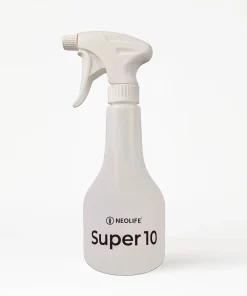
The NeoLife 500ml spray bottle is designed for diluted Super 10 and has an adjustable nozzle that goes from a mist to a direct stream.
What is Super 10?
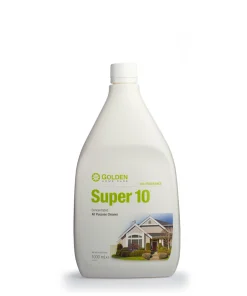
Super 10 is NeoLife’s concentrated all-purpose cleaner. NeoLife describes it as working three ways, penetrating, dissolving and emulsifying dirt and grease, and says it is fine on any surface that plain water would not harm. People use it on worktops, tiles, bathrooms, floors, barbecue grills, garden furniture and garage floors, and on marks such as ink, crayon and grease.
According to the pack, it contains 15 to 30% aliphatic hydrocarbons with smaller amounts (under 5%) of non-ionic surfactants, phosphates and EDTA, plus perfume, and the solution is slightly alkaline. In plain English, surfactants are the ingredients that help water lift oily dirt off a surface so it can be wiped away. The pack carries a warning that it causes serious eye irritation.
It also comes in larger sizes, such as the 5 litre refill, for households that use a lot.
Safety: the rules that matter
Read the label every time
Cleaning products sold in Great Britain that carry a hazard show diamond-shaped pictograms with a red border, alongside written hazard statements. The Health and Safety Executive explains what each symbol means. For Super 10, the key warning is eye irritation, so avoid splashes and rinse eyes with water for several minutes if any gets in, taking out contact lenses if you can.
Never mix with bleach
Never mix any cleaner with bleach, and never combine two different cleaning products. The UK Health Security Agency warns that harmful gases can form when bleach is mixed with acidic products, such as vinegar, or alkaline ones, such as ammonia, and that mixing bleach with acids releases chlorine gas. Super 10 is slightly alkaline, so it belongs firmly in the do-not-mix category. If you use bleach in the same room, rinse the surface well with water in between and let it dry.
Ventilate
Open a window or turn on an extractor fan when you clean, especially in small rooms like bathrooms. If you notice a strong smell, feel your eyes sting or start coughing, stop, get some fresh air and air the room.
Protect skin and store safely
The NHS lists soaps and detergents among the most common skin irritants, so wear household gloves for longer jobs. The NHS advice on poisoning is to store chemicals out of children’s reach, ideally in a locked cupboard, and to keep liquid cleaners in their original containers so they cannot be mistaken for drinks. If you do decant diluted cleaner into a spray bottle, never use an old drinks bottle, label it clearly, and store it with the concentrate, out of reach.
When and how to use your diluted cleaner
- Test a small, hidden area first on anything delicate, painted or unsealed.
- Spray, leave for a moment on greasy spots, then wipe with a damp cloth.
- Rinse food-preparation surfaces with clean water after cleaning.
- Use the stronger 1:3 mix only for genuinely heavy jobs, and the gentler 1:10 for daily wipe-downs.
Products in this guide

Common questions
What does a 1:10 dilution mean?
It means one part concentrate to ten parts water. For example, 50ml of concentrate added to 500ml of water. You end up with eleven parts of solution in total. The same idea works with any measure, as long as you use the same one for the concentrate and the water.
How much cleaner does a 1 litre bottle of Super 10 make?
At the 1:10 general-cleaning ratio, a litre of concentrate makes about 11 litres of solution, enough to fill a 500ml spray bottle around 22 times. At the 1:3 heavy-duty ratio, it makes about 4 litres. Floor cleaning uses one to three capfuls per 4 litres of warm water.
Is it safe to mix Super 10 with bleach?
No. Never mix Super 10, or any cleaner, with bleach or with another cleaning product. The UK Health Security Agency warns that mixing bleach with acidic or alkaline products can give off harmful gases. Use one product at a time and rinse between them.
Does using more concentrate clean better?
Not usually. A stronger mix than the label suggests uses product faster, can leave a residue that needs extra rinsing, and raises the risk of irritation. Stick to the ratio for the job, and give heavy grease a little time to soften before wiping rather than adding more concentrate.
Genuine NeoLife, delivered in the UK
Free UK delivery on orders over £150. Order online, no membership needed.
Safety note: always read and follow the product label. Wear gloves for longer jobs, avoid contact with eyes, keep cleaning products out of reach of children and pets, and never mix cleaners together. If a product is swallowed or gets in the eyes and symptoms persist, get medical advice and have the pack with you.
You can find the full range of concentrates and refills in our home care section.
More guides
 GuidesHow Much Protein Do You Need a Day? The UK Figures in Plain EnglishThe UK reference figure for protein is 0.75g per kilo of body weight a day, most of us already eat more, and a shake…
 GuidesWhich Nutrients Are UK Adults Most Often Low In? What the National Diet and Nutrition Survey ShowsThe UK's own diet survey shows the same gaps again and again: fibre, vitamin D, iron for many women, oily fish and folate, and…
 GuidesA Simple Skincare Routine for Combination or Oily Skin: Cleanse, Tone, Hydrate, MoisturiseCombination and oily skin do best with a short, gentle routine: cleanse twice a day, tone if you like it, add light hydration, moisturise…